Compare

French drain vs channel drain vs surface drain

These get used interchangeably and they should not be. Each one catches water at a different place, and installing the wrong one is how a yard ends up with a drain and a puddle.

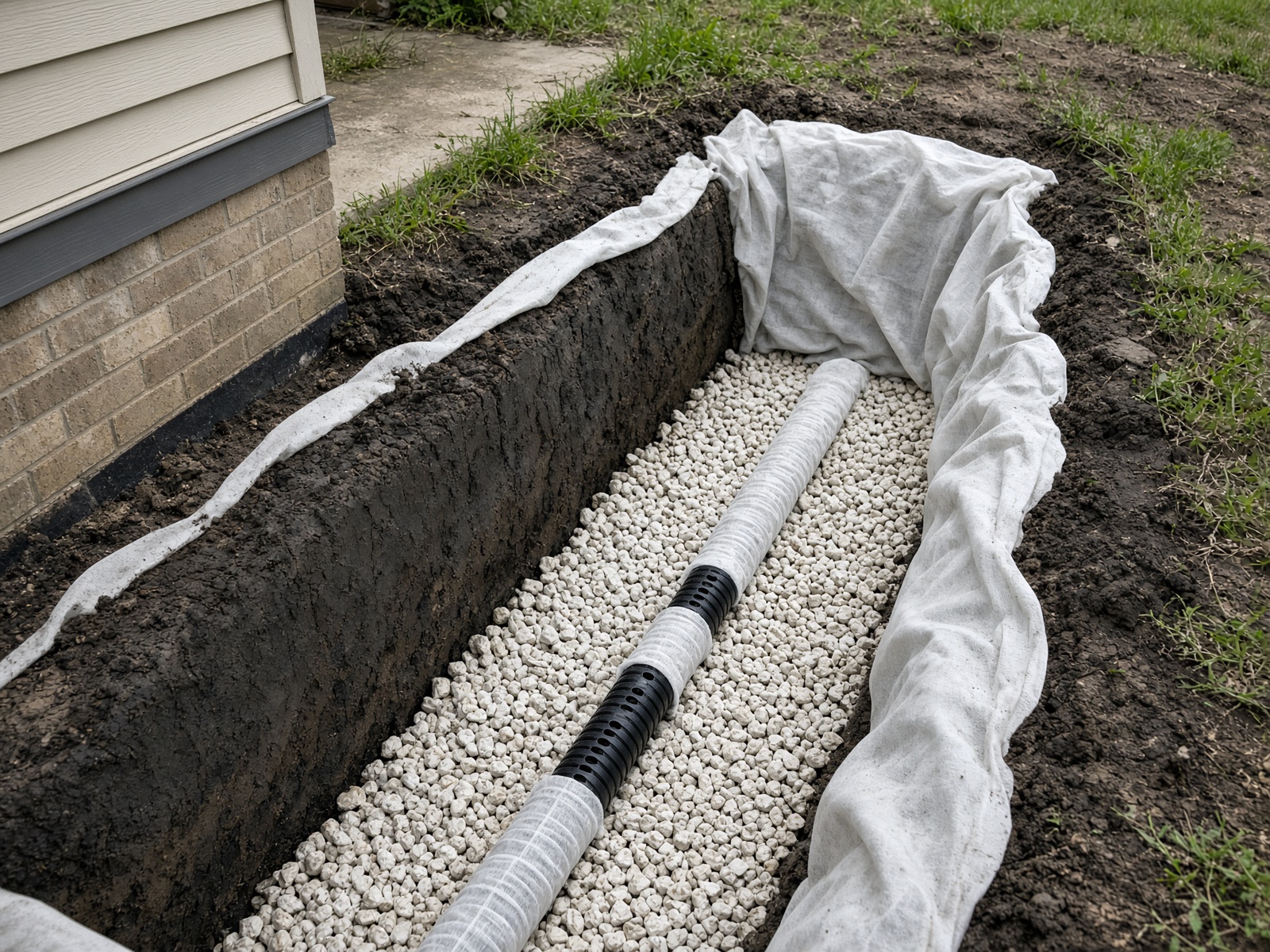
Open French drain trench with washed rock, fabric wrap, and socked perforated pipe.
Fig. A French drain is buried. A channel drain sits in concrete. They are not interchangeable.
Open French drain trench with gravel, fabric, and socked perforated pipe.

French drain

Perforated pipe wrapped in fabric, bedded in washed rock, buried along a run. Collects water along its whole length, from the surface and from the soil around it, and carries it to an outfall.

Catches: saturated ground, fence line ponding on clay, water sitting against a slab.
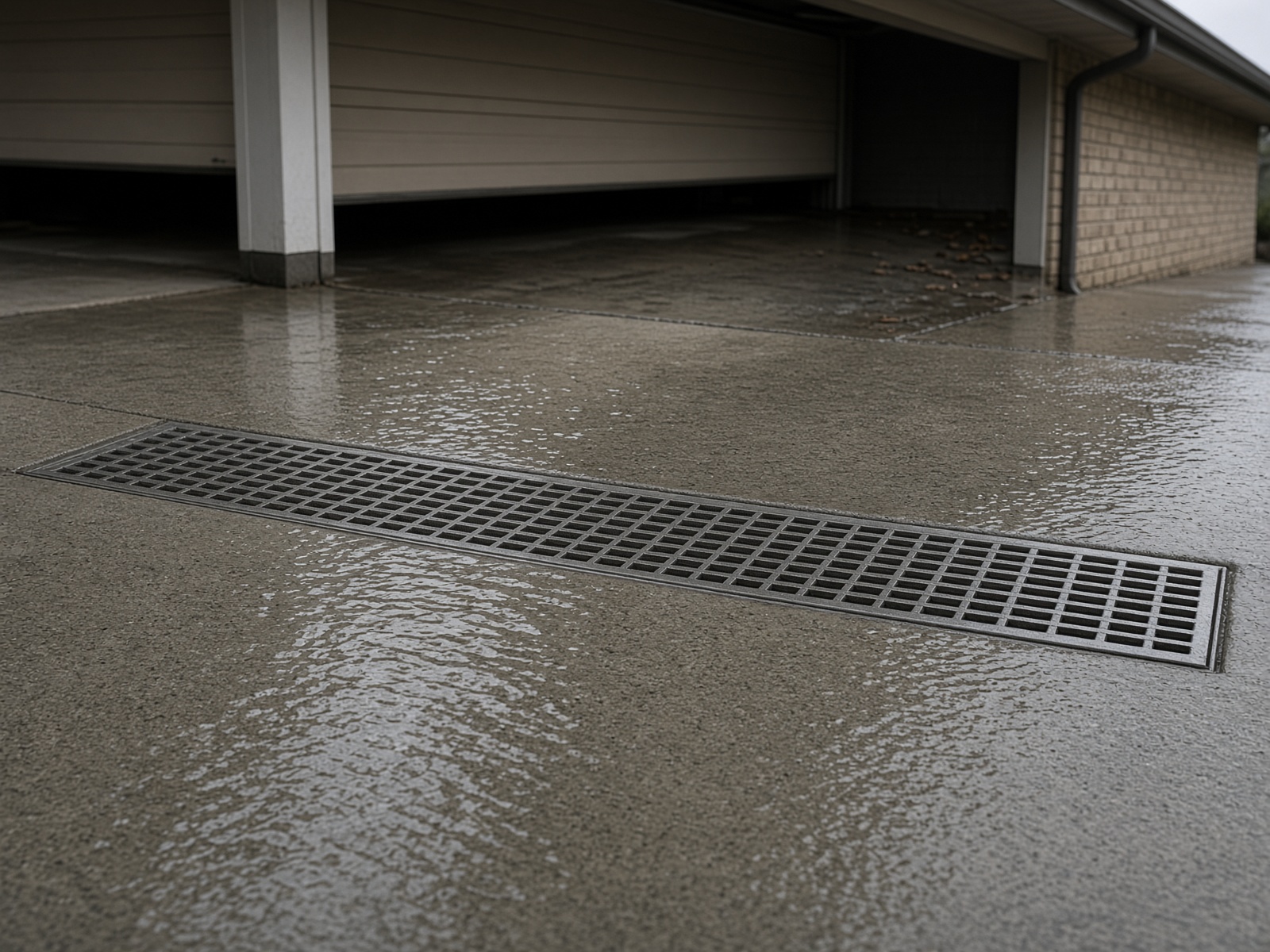
Stainless channel drain set flush across a wet concrete driveway.

Channel drain

A long grated trough set flush in concrete, usually across a driveway or a patio threshold. Intercepts sheet flow moving across a hard surface before it reaches a garage or a door.

Catches: water running over pavement. Nothing in the soil beside it.

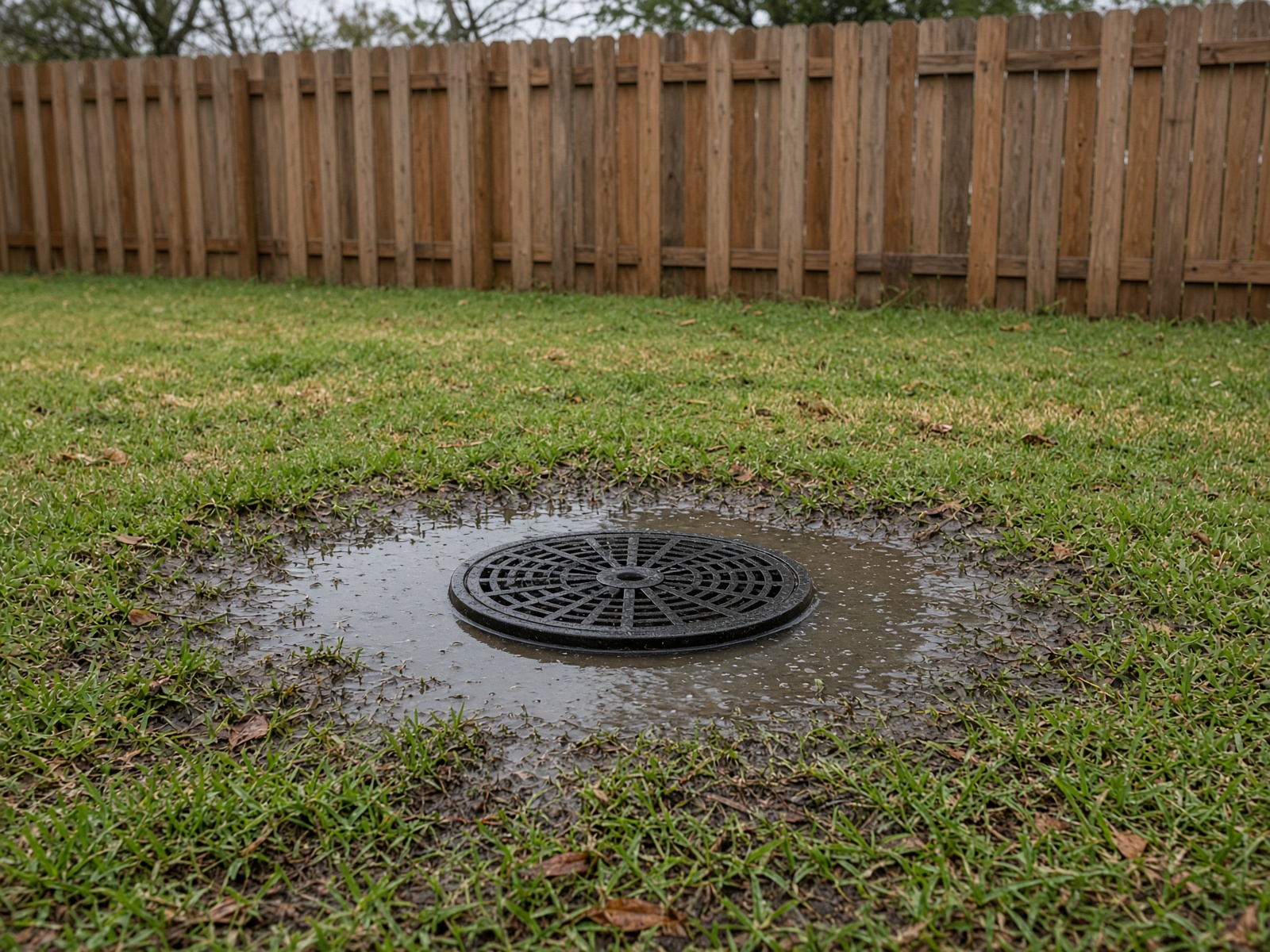
Round grated catch basin in a low spot of a soggy lawn.

Surface drain and catch basin

A grated box set in a low spot, connected to solid pipe. Water has to travel across the lawn to the grate before anything happens.

Catches: a defined low point that already collects. Not diffuse soggy ground.

How to tell which you need

Ask where the water is when you notice it

  • Squishy underfoot

    If the lawn is soft and the water is in the ground rather than on top of it, a surface grate has nothing to collect. This is French drain territory.

  • A visible pond

    Standing water in one defined low spot can often be caught by a basin, if there is somewhere lower to pipe it to. If the whole side yard is wet, a basin just drains the middle of it.

  • Sheeting off concrete

    Water running across a driveway toward a garage is a channel drain problem. A French drain in the lawn beside it will not stop water already on pavement.

  • Coming off the roof

    If the trouble starts at a downspout, it is a downspout line, and it may be the entire fix.

  • Several of these at once

    Common on Hill Country lots. Systems get combined, sharing one trench and one outfall. The design work is deciding what feeds what.

The one that fails most

A channel drain will not dry a side yard

This is the most common mismatch we walk into. A homeowner has a wet side yard, somebody cuts a channel drain into the driveway, and the driveway stops flooding while the side yard stays exactly as wet as it was. The channel drain worked. It just was not the problem.

The reverse also happens. A French drain in the lawn does nothing for water sheeting across concrete, because that water never touches soil until it is already in the garage.

Start here

Tell us what the yard is doing

The form is how jobs start. You describe what you see after a storm, we walk the lot, then you get scope and price on paper. Nothing is priced over the phone.

Get a drainage quote

Tell us the city and what the yard does after a rain. We answer about an inspection and a written quote.

Enter your name.

Enter a phone number with at least 10 digits.

Choose your city.

Tell us what you are seeing.

Service area contractor. No walk-in shop. We reach you with the details you send.

Get a drainage quote